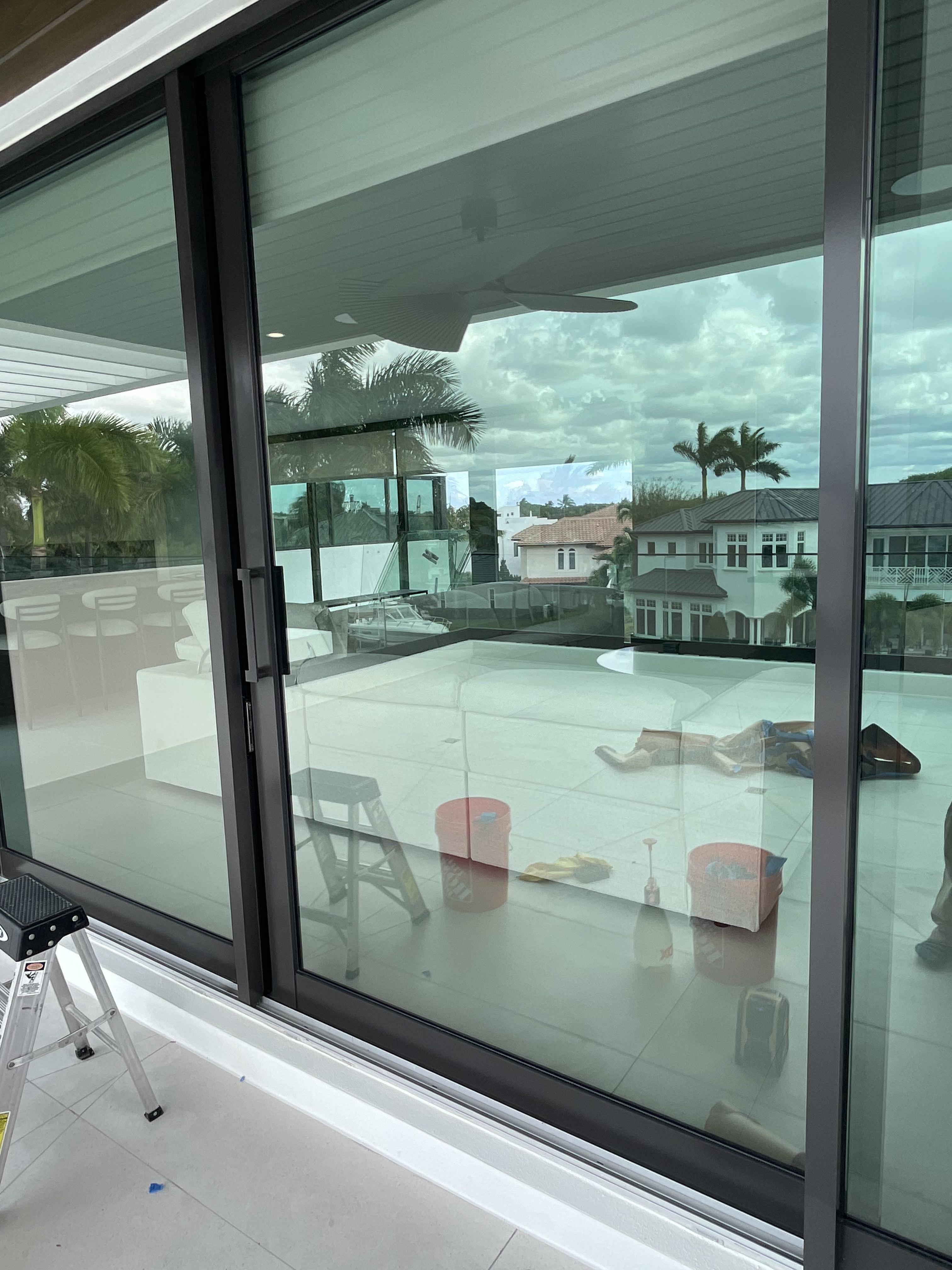
Finding the best paint for Florida humidity is not the same conversation as picking paint anywhere else. Out here on the Space Coast we deal with brutal UV, daily rain, 80% relative humidity for half the year, and salt-laden air off the Atlantic. A paint that lasts ten years in Atlanta might look chalky in three years on a home in Indialantic. After painting Brevard County homes since 1957, we have a short list of products we trust — and a few we steer clients away from. This is the honest breakdown.
Why Florida Destroys Paint Faster Than Anywhere Else
Brevard County paint is fighting a four-front war every single day. Understanding what is actually attacking the film is the first step in choosing a coating that can survive it.
- UV radiation: Florida sits at a low latitude with very long sun hours. UV breaks down the resin binders that hold pigment to the surface. Cheap paints chalk — that powdery residue you see on old stucco — within a couple of seasons.
- Humidity: Year-round moisture in the air feeds mold and mildew spores, which colonize the paint film and feed on dust, pollen, and surfactants leaching out of the coating itself.
- Salt air: If you live east of US-1, you get airborne sodium chloride crystals settling on your walls every day. Salt is hygroscopic — it pulls water out of the air — keeping the paint film damp and accelerating breakdown.
- Thermal cycling: A west-facing wall in Melbourne can hit 140°F surface temperature, then drop 30°F when an afternoon thunderstorm rolls through. That constant expansion and contraction stresses every coating you put on the wall.
Add in hurricane-driven rain hitting walls horizontally and you can see why finding paint that lasts in Florida heat is not a marketing claim — it is a real engineering specification.
What to Look For in a Florida-Grade Paint
When we evaluate a product for a Brevard County exterior, we read the technical data sheet, not the front of the can. The best paint for Florida humidity will hit these specs:
- 100% acrylic resin: Acrylic binders flex with thermal movement and resist UV degradation far better than vinyl-acrylic blends. If the data sheet does not say 100% acrylic, walk away.
- High volume solids (typically 38% or higher): More solids means more film thickness per coat, which translates directly into longer service life.
- Built-in mildewcide: Look for language like "mildew-resistant coating" with an EPA registration. This is not optional in Florida.
- Elasticity rating: The ability of the film to stretch over hairline cracks without splitting. Premium exterior products can elongate 200–600%.
- Appropriate sheen: For Florida exteriors, a low-sheen satin or soft-gloss usually outperforms flat because it sheds water and resists mildew colonization better.
Best Exterior Paints for Brevard County Homes
When clients ask us for the best exterior paint Florida has on the shelf, these are the three we put on the most homes in Melbourne, Viera, Palm Bay, and the beachside communities. None of them is universally "best" — each has tradeoffs.
1. Sherwin-Williams Emerald Exterior
The workhorse of our exterior business. Emerald is a 100% acrylic, self-priming coating with excellent UV resistance and a strong mildewcide package. It lays down flat, hides well in two coats over most surfaces, and holds color beautifully even on south-facing walls.
Pros: Outstanding fade resistance, easy application, lifetime limited warranty when applied to spec, broadly available across the Space Coast.
Cons: Premium pricing ($85–$105 per gallon retail). Some deep accents need a third coat. The "self-priming" claim works on sound surfaces — bare stucco still wants a dedicated primer.
2. Benjamin Moore Aura Exterior
BM Aura uses their proprietary Color Lock technology, which essentially encapsulates the pigment so it does not migrate or fade. On rich colors — deep blues, warm reds, charcoals — Aura holds up noticeably better than most competitors. The finish has a slightly softer, more refined look than Emerald.
Pros: Best-in-class color retention for saturated tones, excellent mildew resistance, smooth lay-down, low-VOC formulation.
Cons: The most expensive of the three ($90–$115/gal). Benjamin Moore dealer density in Brevard County is lower than Sherwin-Williams, so touch-up matching takes longer. Thinner film than Emerald — heavily textured stucco may need an extra coat.
3. PPG Timeless Exterior
Often the value pick when budget matters but you still want a true Florida-grade product. Timeless is a 100% acrylic with a solid mildewcide and a respectable elasticity rating. It does not hit the durability ceiling of Emerald or Aura, but it punches well above its price.
Pros: Strong price-to-performance ratio ($55–$70/gal), available at Home Depot for easy mid-job material runs, lifetime limited warranty.
Cons: Color retention on deep tones is weaker than Aura or Emerald. Softer film picks up dirt more readily in humid micro-environments like screened lanais. Expect 7–10 years rather than 10–15.
Not sure which paint is right for your home?
Paint Craft of Brevard has been specifying coatings for Florida homes since 1957. We will walk your exterior, point out the failure modes we are seeing, and recommend the right product for your budget and your microclimate.
Get a Free Estimate arrow_forwardBest Interior Paints for Florida's Humid Indoor Air
Even with the AC running, Florida interiors stay more humid than most of the country. Bathrooms, laundry rooms, garages, and exterior walls in older block homes are all candidates for mildew without the right product.
- Sherwin-Williams Duration Home or Emerald Interior: Both include a mildewcide additive and a moisture-resistant film. Emerald Interior with the Anti-Microbial technology is our default for bathrooms, laundry rooms, and any wall sharing a footprint with an exterior CBS wall that tends to sweat.
- Benjamin Moore Aura Bath & Spa: Purpose-built for high-humidity rooms. The matte finish looks expensive, but the film is engineered to shed steam and resist mildew in shower-adjacent walls. We use this in master baths where the homeowner wants a designer look without semi-gloss.
- Behr Premium Plus Ultra: The budget pick. Genuinely good for a paint-and-primer-in-one at this price point, with a built-in mildewcide. We will not pretend it performs like Aura, but for a rental property or a kid's room in a dry interior space, it gets the job done.
One note on mildewcide: every premium interior paint includes some level of in-can preservative, but the mildewcide that protects the dry film is what matters in Florida. Always confirm the data sheet says "mildew-resistant coating" for any room that sees regular moisture. For more on choosing the right finish, see our guide to eggshell, satin, and flat sheens.
Elastomeric vs Acrylic: When Each Makes Sense
Elastomeric coatings are a category unto themselves. They are 10–20 mils thick when dry (versus 2–4 mils for standard acrylic), and they can stretch 300–600% to bridge hairline cracks in stucco. For a stucco home in Brevard County with visible cracking, elastomeric is often the right answer.
The catch: elastomeric is a heavy, thick coating that needs to be sprayed and back-rolled correctly or it traps moisture against the wall. On a CBS home that breathes through the stucco, a poorly applied elastomeric job can cause more problems than it solves — blistering, efflorescence, and even substrate damage. We use elastomeric strategically: on stucco with hairline cracks, on parapet walls, and on coastal homes where wind-driven rain hits horizontally. We do not default to it on every house.
For wood siding, fiber cement, or stucco in sound condition, a premium 100% acrylic like Emerald or Aura is the better choice. It breathes, it flexes enough for normal movement, and it is easier to recoat down the road.
Mildew and Mold Resistance: The Specs That Matter
For mildew resistant paint Brevard County homeowners need to look past the can label — "mildew-resistant" by itself is not a regulated claim. What you actually want to see is an EPA-registered mildewcide listed in the technical data sheet, along with language about the dry film resisting fungal growth. The two most common additives — zinc pyrithione and IPBC — are both effective when present in the right concentrations.
Where you place the paint matters as much as the product. Mildew thrives in shade, low airflow, and persistent moisture. North-facing walls under heavy oak canopies (common in older Melbourne neighborhoods) will mildew faster than south-facing walls in full sun, regardless of which paint you use. Pressure-washing every 12–18 months and trimming back vegetation is part of the maintenance equation — the paint is only one variable.
Coastal Homes: Extra Considerations for Indialantic, Cocoa Beach, Satellite Beach
If your home sits east of the Indian River, you live in a different paint environment than someone in inland Melbourne. Salt air accelerates everything. We have seen builder-grade exterior paint fail in 18 months on a Cocoa Beach oceanfront. Here is what changes for coastal homes:
- Step up to premium acrylic, no exceptions. Emerald or Aura, not the value tier. The math always works out — you will repaint twice as often otherwise.
- Rinse the walls annually. A simple garden-hose rinse a few times a year removes the salt crust and dramatically extends paint life.
- Use the right primer on bare metal. Railings, light fixtures, and exposed fasteners need a rust-inhibitive primer (DTM acrylic or epoxy) before topcoat — otherwise rust will bleed through within a year.
- Specify a mildewcide-heavy formulation. Coastal humidity plus salt is a worst-case mildew environment.
If you are picking colors for a coastal home, our guide to the best exterior paint colors for Florida homes covers palettes that hide salt residue and chalking better than others.
Why Cheap Paint Costs You Twice in Florida
We get asked constantly: can we just use the contractor-grade stuff at the box store to save money? In Florida, the answer is almost always no. Here is the math on a typical 2,200 sq ft Melbourne home.
A budget paint job at $35/gallon might cost $4,500 and last 4–5 years before chalking, fading, or mildewing. Over 15 years that is three repaints at roughly $4,500 each — $13,500 total, plus the disruption. A premium job using Emerald or Aura at $90/gallon might cost $7,500 and last 12–15 years. Over the same 15 years that is one paint job: $7,500 versus $13,500. Cheap paint costs you twice, and your house looks worse in between. The best paint for Florida humidity is the one you do not have to reapply every four years.
What Paint Craft of Brevard Uses and Why
Our default exterior spec for most Brevard County homes is Sherwin-Williams Emerald Exterior in satin, over a premium primer where the substrate calls for it. For coastal homes east of A1A, we step up to Benjamin Moore Aura Exterior for the superior color retention against salt and UV. For stucco showing hairline cracks, we use an elastomeric system applied with proper film build. Inside, our standard is Emerald Interior in living areas, Aura Bath & Spa or Emerald anti-microbial in bathrooms and laundry rooms, and PPG Timeless when budget is the deciding factor.
The product matters, but application matters more. Two coats at proper film thickness, the right primer on the right substrate, mild-day application (we avoid spraying when surface temps exceed 95°F), and proper cure time between coats. A premium paint applied badly will fail; a mid-tier paint applied correctly will outperform it. That is what 69 years in Brevard County has taught us.
Ready to repaint with paint that actually lasts?
Paint Craft of Brevard has been picking the right coatings for Florida homes since 1957. Get a free, no-pressure estimate and we will tell you exactly which product makes sense for your house — and why.
Request Your Free Estimate arrow_forwardOr call (321) 403-4477 — serving Melbourne, Viera, Palm Bay, Cocoa Beach, and all of Brevard County.
Want to go deeper? Read about professional exterior painting in Brevard County or our interior painting services for humid Florida homes — both pages cover how we choose the best paint for Florida humidity on every job.